In the City of Los Angeles, you need a permit to remove a protected native tree: most native oaks, Southern California black walnut, western sycamore and California bay, once the trunk measures 4 inches or more, 4½ feet above the ground. Any street tree in the parkway also needs a City permit to remove, prune or root-prune.
Get a Free Estimate Is my tree protected? Ask a licensed contractor
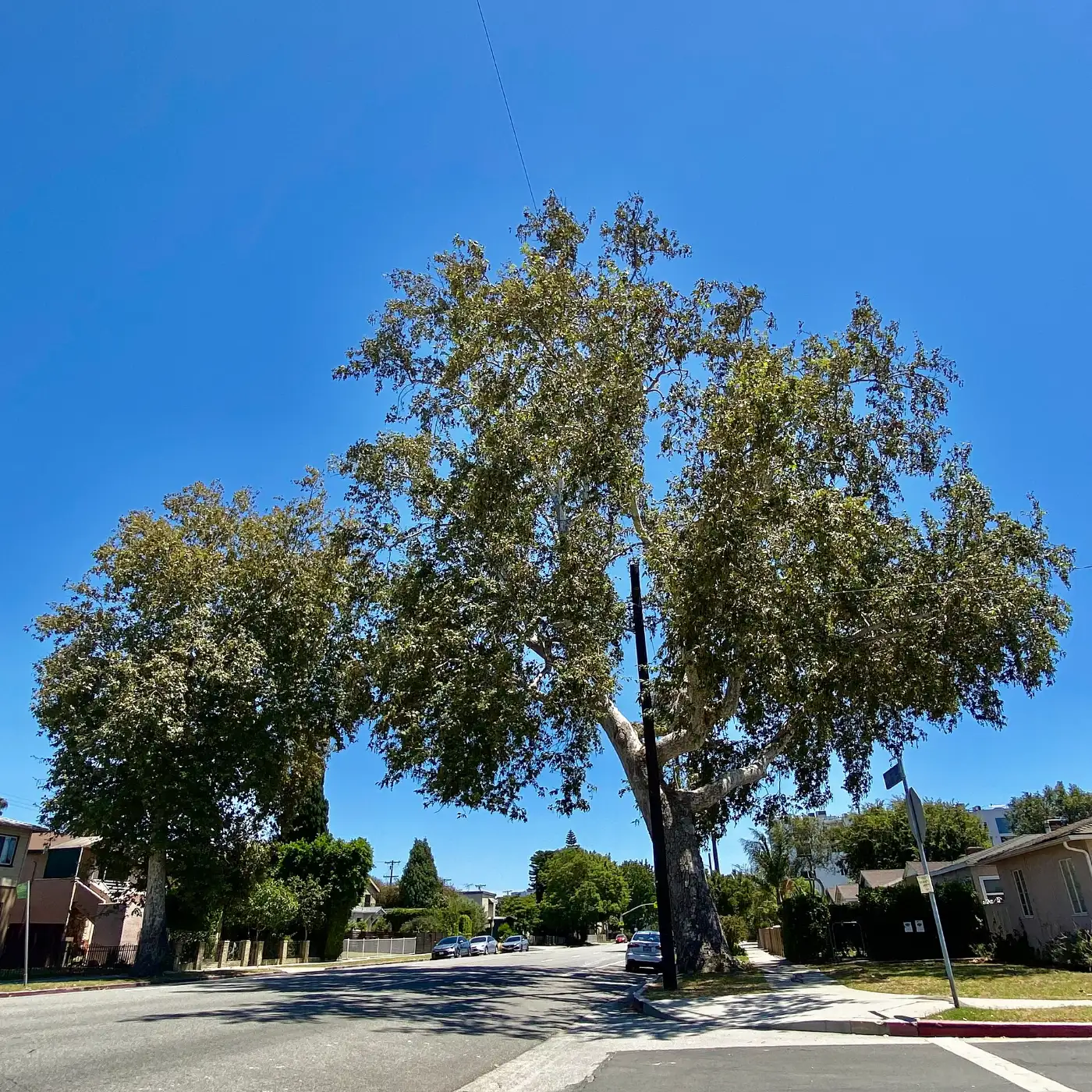 Inglewood Blvd, Del Rey

Which trees are protected in LA?
The City's ordinance (LAMC 46.00–46.06) protects these native species:
| Protected trees | Protected shrubs (added 2021) |
|---|---|
| Any oak native to California, except scrub oak (Quercus berberidifolia). Coast live oak is the most common | Mexican elderberry |
| Southern California black walnut | Toyon |
| Western sycamore | |
| California bay |
The size rule: a tree or shrub is protected once its trunk, or trunks added together, measures 4 inches or more in diameter, 4½ feet above the ground. Trees or shrubs grown or held for sale by a licensed nursery, or planted as part of a planting program, aren't covered.
Sources: LAFD protected trees ordinance, LAMC 46.00, StreetsLA protected tree photo guide
What counts as "removal"?
More than cutting it down. The ordinance treats any act that will cause a protected tree to die as removal. Cutting it back too hard, damaging the roots during construction, or paving over its root zone can all count.
How to get a protected tree removal permit
- Get a service request number from MyLA311, at (800) 996-2489 or myla311.lacity.org.
- Apply through the City's portal (StreetsLA permit page). The application asks for a Protected Tree Report written within the past year, photos and a site plan.
- The Urban Forestry Division inspects the tree and reviews the request.
- Approve or deny. UFD can deny the permit if removal isn't justified or the tree can be kept by changing the plans. Removing 3 or more protected trees also goes to the Board of Public Works.
- Replace and pay. Approved removals require replacement trees at a ratio UFD sets (the application's plan checklist uses 4:1), plus fees.
What it costs and how long it takes (from the City's current application form):
- Fee: $1,084 per 5 protected trees
- Average processing: 90 to 120 days from a complete application
These figures come from the City's current application. Ask UFD to confirm them for a single tree on a home lot, outside a construction project.
Street trees: the tree in front of your house
Trees in the parkway (the strip between the sidewalk and the street) belong to the City and are managed by StreetsLA's Urban Forestry Division. Removing, pruning or root-pruning one needs a UFD permit, even if it's directly in front of your house. To ask the City to inspect or trim a street tree, file a request through MyLA311. Sources: StreetsLA trees, LADBS regulated trees guidelines
Fire clearance doesn't override the permit
In high fire hazard zones, LAFD requires brush and tree clearance every year, and its rules say the clearance must follow the protected tree ordinance. You can trim for clearance. You can't remove or kill a protected tree without a permit. Brush clearance rules
Outside the City of LA
Nearby cities have their own rules. What we've checked so far:
| Where | What's protected | Pruning |
|---|---|---|
| Glendale | Native oak, California bay and California sycamore with a cumulative trunk of 6 inches or more | No permit for routine pruning: dead, dying or diseased branches, plus live branches up to 2 inches across |
| Pasadena | Native trees (oaks including scrub oak, sycamore, walnut, bay, cottonwoods, alder, arroyo willow, buckeye) over 8 inches at 4½ ft, plus specimen and landmark trees | No permit to prune a native or specimen tree on private property as long as the tree isn't injured |
| Unincorporated LA County | All oaks 8 inches or more at 4½ ft (6 inches in Significant Ecological Areas and the Santa Monica Mountains). Heritage oaks (36 inches+) need a permit with a public hearing | Pruning larger branches or roots needs an Oak Tree Permit |
| Beverly Hills | Protected trees need a removal permit. The City notes this applies to protected trees between the house and the street | Check with the City |
Sources: Glendale permit guidance, Pasadena Municipal Code 8.52, LA County Oak Tree Permit FAQ, Beverly Hills. For Burbank, Santa Monica and other cities, check the city's website before any work.
Sources
- City of Los Angeles Municipal Code §§46.00–46.06; Ordinance 186,873 (effective Feb 4, 2021)
- LAFD, Protected Trees and Shrubs Ordinance page
- StreetsLA, Private Property Native/Protected Tree Removal Permits; Trees
- Bureau of Engineering, protected tree removal permit application (fee, report, replacement, 90–120 day processing)
- LADBS, Guidelines and Requirements for Regulated Trees